Introduction to the Jin Dynasty
Today, we will learn about the Jin Dynasty, a relatively little-mentioned and short-lived dynasty, and its 140-year history of unification (280 AD – 420 AD).
The Jin Dynasty, inheriting the flames of the Three Kingdoms period and preceding the division of the Northern and Southern Dynasties, was an extremely tortuous dynasty in Chinese history after the collapse of the Qin and Han dynasties. It briefly unified China, but quickly fell into a vortex of internal strife and ethnic conflict.
The Western Jin Dynasty destroyed its foundation due to the “War of the Eight Princes,” triggering the “Five Barbarian Invasions,” and was forced to migrate south; the Eastern Jin Dynasty, confined to the south of the Yangtze River, became a model of aristocratic politics.
Despite its political weakness, the Jin Dynasty left a profound mark on cultural integration and economic southward migration, accumulating crucial energy for the later unification under the Sui and Tang dynasties.
Why the Name "Jin"?
The Jin Dynasty took its name from Sima Zhao, who first received the title “Duke of Jin” and later “King of Jin.” His fiefdom matched the former territory of the State of Jin from the Spring and Autumn Period, located in present-day Shanxi.
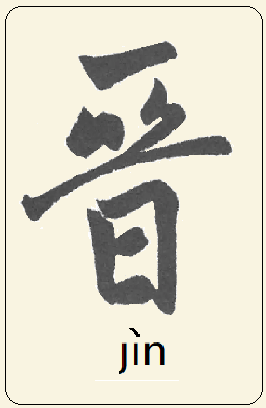
The character “Jin” means “advancement and promotion.” By adopting this name, the Sima family asserted their right to inherit the Central Plains’ orthodox rule and replaced the Cao Wei regime to found a new dynasty.
The Establishment and Early Period of the Jin Dynasty
Sima Yi, the founder of the Jin Dynasty, seized power in Cao Wei during the “Incident at Gaoping Tombs.”
His sons, Sima Shi and Sima Zhao, consolidated their family’s grip on authority. After Sima Zhao conquered Shu Han and received the title King of Jin, his son Sima Yan forced Emperor Cao Huan of Wei to abdicate in 265 AD.
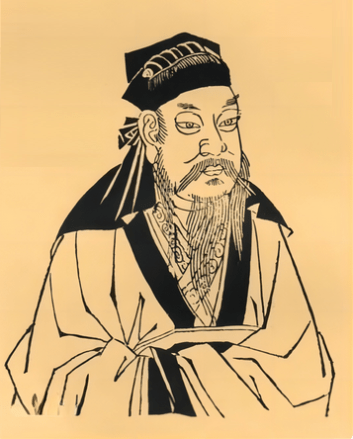
Sima Yan then declared himself emperor, founding the Jin Dynasty as Emperor Wu of Jin. In the early years, Emperor Wu took steps to restore order, reducing military forces in local areas and suppressing powerful clans, which brought a period of social stability.
In 280, the Jin army attacked Wu and compelled its ruler, Sun Hao, to surrender, thus ending the Three Kingdoms era and bringing about a short-lived unification. However, Emperor Wu appointed many princes of his own clan to high positions, granting them significant power and setting the stage for regional rule by princes.
In his later years, he succumbed to extravagance—famously choosing concubines by filling carriages with sheep—leading to growing corruption in the court. When Emperor Hui of Jin took the throne, his mental instability and incompetence, combined with Empress Dowager Jia Nanfeng’s interference, sparked the disastrous “War of the Eight Princes.”
The total duration of the Western Jin and Eastern Jin Dynasties:
Historians divide the Jin Dynasty into two eras: the Western Jin and the Eastern Jin.
The Western Jin began in 265 AD, when Sima Yan became emperor, and ended in 316 AD, when Chang’an fell and Emperor Min of Jin was captured—a span of 51 years. If we count only the unified period after the conquest of Wu in 280 AD, it lasted 36 years. The Western Jin ruled from its capital at Luoyang and remained a unified dynasty for only a short time.
The Eastern Jin Dynasty started in 317 AD, when Sima Rui took the throne in Jiankang (modern-day Nanjing) as Emperor Yuan of Jin. The dynasty lasted until 420 AD, when Liu Yu overthrew Emperor Gong of Jin and established the Liu Song Dynasty, marking a 103-year rule.
From the founding of the Western Jin in 265 AD to the fall of the Eastern Jin in 420 AD, the Jin Dynasty spanned 155 years. If we count only the reign years of officially recognized emperors, the total is about 154 years. Although the Jin Dynasty outlasted many other dynasties, its era of true unification was brief.
The Western Jin controlled northern China for just three decades, while the Eastern Jin coexisted with the Sixteen Kingdoms in the north. The Jin era is best remembered for its fleeting unity, long stretches of division, weak central authority, powerful clans, and the first signs of southern development and ethnic integration.
Emperors of the Jin Dynasty
The Jin Dynasty produced 15 emperors, not counting those deposed or honored posthumously. The Western Jin had four emperors: Emperor Wu (Sima Yan), Emperor Hui (Sima Zhong), Emperor Huai (Sima Chi), and Emperor Min (Sima Ye). The Eastern Jin saw 11 emperors: Emperor Yuan (Sima Rui), Emperor Ming (Sima Shao), Emperor Cheng (Sima Yan), Emperor Kang (Sima Yue), Emperor Mu (Sima Dan), Emperor Ai (Sima Pi), Emperor Fei (Sima Yi), Emperor Jianwen (Sima Yu), Emperor Xiaowu (Sima Yao), Emperor An (Sima Dezong), and Emperor Gong (Sima Dewen).
Among them, Emperor Hui and Emperor An famously suffered from mental disabilities, allowing ministers, empresses, and warlords to control the court. Most emperors reigned for less than ten years and met violent ends or were forced to abdicate, highlighting the Jin Dynasty’s weakening imperial power.
Two Major Contributions of the Jin Dynasty
Although the Jin Dynasty’s reign was brief, two of its innovations stand out and deserve recognition.
i. Driving the 'Southward Migration of the Elite' and thoroughly developing the Jiangnan economy."
After the “Yongjia Rebellion,” gentry and commoners alike fled south from the Central Plains, starting the era known as the “Southern Migration of the Gentry.” These northern migrants brought advanced farming techniques, iron tools, and expertise in water management to the Jianghuai, Taihu, and Poyang Lake regions.
The Eastern Jin established new prefectures and counties in Jiankang (Nanjing) to resettle the newcomers, which fueled large-scale land reclamation in Jiangnan. Soon, polder fields, terraced fields, and lake fields appeared. Southern agriculture, once primitive and based on slash-and-burn, shifted rapidly to intensive farming. Silk weaving, celadon, and shipbuilding industries boomed, while Guangzhou and Yangzhou rose as key trading ports. Grain production in the lower Yangtze soon outstripped the north, giving rise to the saying,
“When Suzhou and Huzhou are bountiful, the whole country is well-fed.” This simultaneous shift of political and economic centers southward laid the foundation for the Grand Canal’s prosperity in the Sui and Tang dynasties and for the Southern Song Dynasty’s reliance on Jiangnan’s resources. Without the migration during the Jin Dynasty, Jiangnan might have remained underdeveloped for centuries.
ii. Driving Cultural Fusion and Opening an Era of Dynamic Diversity
The Jin Dynasty promoted the integration of Han and non-Han peoples, ushering in a “golden age” of cultural exchange.
When the Five Barbarian tribes surged into the Central Plains, what seemed like disaster actually shattered the old barriers separating Han and non-Han. The Xiongnu, Xianbei, Jie, Di, Qiang, and Han people began living side by side, blending their languages, customs, and even marriages. Non-Han peoples gradually adopted the prefecture-county administrative system, while Han people borrowed non-Han clothing, beds, cavalry tactics, and animal husbandry techniques.
The clash between the refined etiquette of the Central Plains and the martial spirit of the steppes sparked a new cultural vitality—non-Han music and Han dance appeared together in Dunhuang murals; artisans carved the Longmen Grottoes in Luoyang; and instruments like the Huqin, Pipa, and Qiang flute became popular. More importantly, Han aristocratic families in the north, such as the Cui, Lu, Li, and Zheng clans, learned to cooperate with non-Han regimes, introducing Confucian ideas to nomadic rulers and inspiring reforms like the Sinicization of the Northern Wei under Emperor Xiaowen.
Later dynasties, such as the Sui and Tang, inherited this legacy of “Han-Hu dual rule”—the Tang imperial family itself was of mixed Han and Hu descent. The three centuries of ethnic upheaval during the Jin era forged a more inclusive and resilient new Han identity.
A Turbulent and Chaotic Jin Dynasty
I would like to specifically mention the following two upheavals, which I believe shook the very foundations of the Jin dynasty and severely damaged its vitality.
i. The War of the Eight Princes: The Source of the Western Jin's Destruction
The War of the Eight Princes erupted as a series of brutal civil wars within the Western Jin imperial family, each prince vying for control of the central government. Sima Liang, Prince of Runan; Sima Wei, Prince of Chu; Sima Lun, Prince of Zhao; Sima Jiong, Prince of Qi; Sima Yi, Prince of Changsha; Sima Ying, Prince of Chengdu; Sima Yong, Prince of Hejian; and Sima Yue, Prince of Donghai, all played central roles in this conflict.
Emperor Hui’s mental instability set the stage: Empress Jia Nanfeng murdered the regent Yang Jun, then Sima Liang and others, sparking armed interventions by the princes. For sixteen years, from 291 to 306, Luoyang and Chang’an became the main battlefields.
The princes constantly forged and broke alliances, betraying one another and ordering the slaughter of tens of thousands of soldiers and civilians. Sima Yue, the Prince of Donghai, eventually claimed victory, but by then the Western Jin’s elite forces lay in ruins and the treasury stood empty. Sensing weakness, Liu Yuan of the Xiongnu and Shi Le of the Jie people launched their own rebellions.
This internal chaos shattered central authority, turning local prefectures and counties into warlord strongholds. As the Book of Jin lamented, “Eight princes fought each other, spears and halberds turned inward, and the Central Plains were submerged; this was the cause.” This period powerfully illustrates how unchecked enfeoffment of princes can poison a nation.
ii. The "Five Barbarian Invasions": A Century of Catastrophe in the Central Plains
The “Five Barbarian Invasions” describes how five major nomadic tribes—the Xiongnu, Xianbei, Jie, Di, and Qiang—seized the chaos following the Western Jin’s collapse to carve out separatist regimes in northern China.
In 304, Liu Yuan of the Xiongnu proclaimed himself King of Han, igniting the turbulent Sixteen Kingdoms period. Soon after, Shi Le shattered the Western Jin’s main forces, captured Luoyang and Chang’an, and orchestrated a “massacre of the elite,” taking Emperor Huai and Emperor Min of Jin captive.
The Han Chinese in the north endured horrific massacres and enslavement; historians recorded that “not one in ten of the gentry in the Central Plains survived,” and “for a thousand miles in Hebei, not a rooster crowed.” The non-Han regimes fought bitterly among themselves; Fu Jian of the Former Qin briefly unified the north, but after his defeat at the Battle of Fei River, fragmentation returned.
From 304 to 439, until the Northern Wei finally unified the north, war ravaged the region for 135 years. Han Chinese refugees fled to Liaodong, Hexi, and Jiangnan; those who stayed either fortified villages to survive or were reduced to “non-Han slaves.”
The economy crumbled, cities became ruins, and the population plummeted by more than two-thirds. Yet, even this catastrophe brought change: it swept away the old corrupt aristocrats, taught the non-Han rulers to adopt Han laws, and paved the way for Emperor Xiaowen of the Northern Wei to enact reforms. Pain and rebirth became inseparable in the flames of war and suffering.
The "Aristocratic Clans" of the Eastern Jin Dynasty
The Eastern Jin Dynasty exemplified aristocratic politics and witnessed the steady decline of imperial authority, until “the Wang and Ma families shared the empire.”
The Langya Wang clan began this pattern: Wang Dao took control of the government, Wang Dun led the military, and Emperor Yuan became a mere figurehead. Following them, the Yingchuan Yu clan, the Qiao state Huan clan, and the Chenjun Xie clan each seized power in turn, creating a continuous cycle of “clan rule.”
The upper echelons contained no poor families, as the Nine-Rank System became a tool for hereditary succession. Aristocratic families filled high offices, commanded private armies (the Xie clan formed the Northern Army), seized land, and guarded their own interests; even the emperor struggled to remove them.
When Xie An commanded at the Battle of Fei River and Huan Wen launched three Northern Expeditions, they acted primarily to defend their clans’ dominance. These aristocrats immersed themselves in metaphysics and the Five-Stone Powder, and indulged in landscape painting and calligraphy, yet neglected the urgent task of reclaiming the Central Plains.
Meanwhile, internal power struggles erupted repeatedly: Wang Dun, Su Jun, and Huan Xuan led three major rebellions, draining the nation’s strength. This aristocratic system propped up the Eastern Jin Dynasty for a century, but ultimately caused its downfall, paving the way for Liu Yu—a man of humble origin—to seize power.
The Fall of the Eastern Jin Dynasty
In the final years of the Eastern Jin, Sun En and Lu Xun led uprisings that shattered the power of the aristocratic clans. Liu Yu, a general from humble origins and commander of the Northern Army, seized military and political control by crushing rebellions and launching campaigns against Southern Yan and Later Qin.
He conquered Huan Chu and pacified Western Shu, earning great acclaim and eclipsing the emperor—much like Cao Cao and Sima Yan before him. In 420 AD, Liu Yu compelled Emperor Gong of Jin, Sima Dewen, to abdicate, founded the Liu Song Dynasty, and brought the Eastern Jin to an end. Sima Dewen died a year after his abdication, and the Eastern Jin imperial family nearly vanished.
From Sima Rui’s southward migration in 317 to the dynasty’s fall in 420, the Eastern Jin endured for 103 years. Its collapse ended the era of aristocratic politics and ushered in a new age where “commoners held key positions” during the Northern and Southern Dynasties. The southern gentry could no longer resist imperial authority, and history turned a new page, revealing a rawer struggle for power and intrigue.
Summary of the Jin Dynasty
The Jin Dynasty was a “dynasty caught in the middle”: its unification was extremely short-lived, its division extremely long; imperial power was extremely weak, while powerful clans were extremely strong; the north was extremely chaotic, while the south was extremely prosperous.
It was a complete political failure, yet it made invaluable contributions to cultural integration and the southward shift of the economy. Without the trial and error and suffering of the Jin Dynasty, there would have been no openness and prosperity of the Sui and Tang Dynasties. A seemingly “incompetent” dynasty, yet it expanded new possibilities for Chinese civilization.
My Reflections on the Jin Dynasty
When I first read about the Jin Dynasty in school, the fable of “the snipe and the clam fighting” (鹬蚌相争) immediately came to mind. The kingdoms of Wu, Wei, and Shu schemed and battled relentlessly, each striving for dominance. In the end, their conflicts only paved the way for the Sima family, who seized the opportunity and established the unified Jin Dynasty.
Now, as I reflect on this chapter of history, I better understand the meaning of “the chosen one” (真命天子). Fate had already set its course, leaving little room for human intervention. Even a ruthless and cunning figure like Cao Cao, who seemed to command his own destiny, ultimately bowed to the unyielding force of fate.