The Zhou Dynasty was the third dynasty of China, founded by King Wu of Zhou, who overthrew Di Xin, the last emperor of the previous Shang Dynasty. This marked the end of the Shang’s 554-year rule.
Zhou Dynasty is the longest in Chinese history, ruling for a total of 790 years. However, this long dynasty can be divided into two distinct periods: the Western Zhou (1046 – 771 B.C.) and the Eastern Zhou (770 – 256 B.C.). In this article, we will focus on the Western Zhou period.
The name “Zhou” derives from the name of their tribal homeland, Zhou Yuan. Most members of this tribe bore the surname “Ji,” including the King and his royal family.
“Ji” [姬] is one of the oldest surnames still in use today. It is associated with a feminine symbol, which suggests a matriarchal society at the origin of this surname. We discussed this in our previous article titled “How Chinese Names Work.” Do you remember Huang Di? He also has the surname “Ji.”
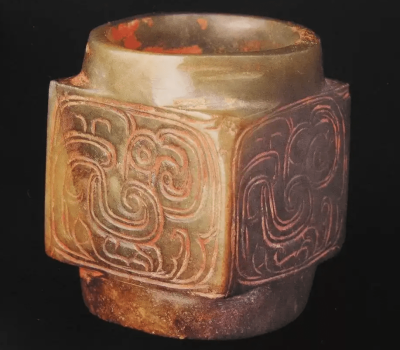
Zhou Wu Wang’s father, Ji Chang, the previous king, was renowned for his compassion towards his people and allies. This earned him the trust and respect of other tribes, which ultimately supported him in challenging the Shang. The war initiated by his son resulted in the successful collapse of the Shang Dynasty.
What We Learned from the China Third Dynasty - Western Zhou
We can learn about the history of the Zhou Dynasty from the archaeological site of Feng Hao Ruins, located in present-day Shaanxi. This ancient city served as the capital during the Western Zhou period. It is referred to as the Western Zhou era because this capital is situated on the west side, while the capital of the Eastern Zhou, Luo Yi (in modern-day Henan), is located on the east side.
Another significant historical site from the Zhou Dynasty is Yan Du, located in present-day Beijing. All of these historical sites are open for public visits.
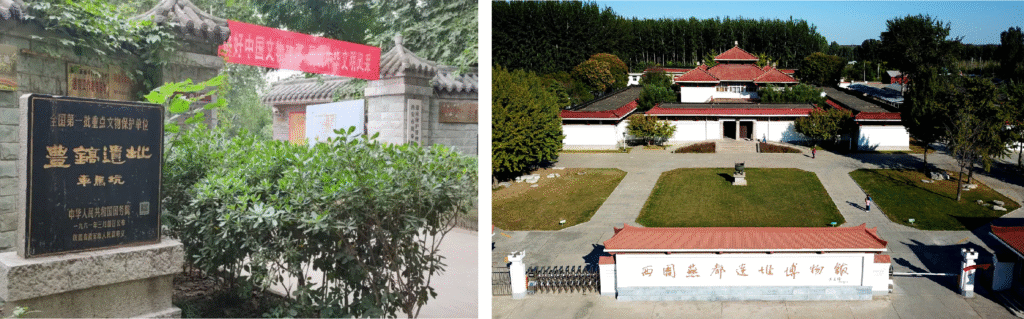
Feng Hao was one of the world’s largest and most populous cities at its time, surpassing the Shang Dynasty capital in various aspects, including facilities, infrastructure, manufacturing, building scale, technologies, and administration. The city featured an administrative center, a business district, a hunting area, a manufacturing hub, agricultural sections, a palace complex, and graveyards.
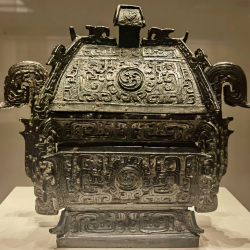
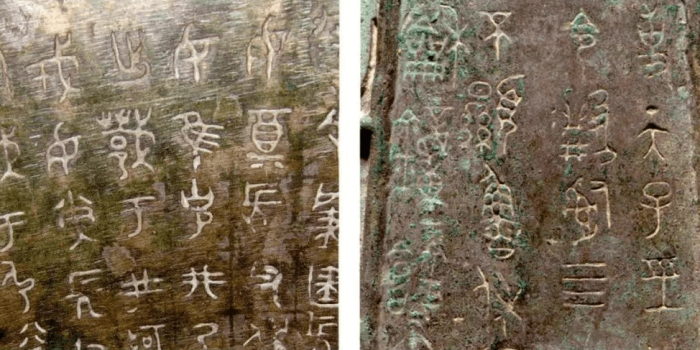
A large quantity of advanced bronze objects have been uncovered, many of which contain inscriptions that record historical events.
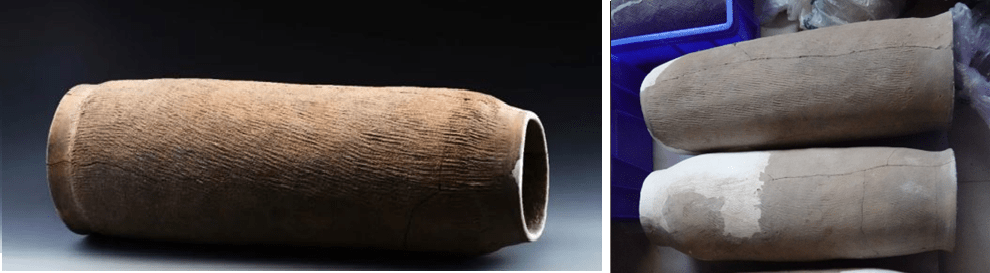
Archaeologists also discovered underground pottery pipes that served as the drainage and sewage system. While they are still determining the extent of this piping system, it is already recognized as the earliest of its kind in China.
Twelve Kings for the Western Zhou Dynasty
The West Zhou era is 275 years long and had 12 kings. Today, I would list down the 12 emperors in a chronological sequence with some remarks about their period.
- King Wu of Zhou (Ji Fa) – Founder of Western Zhou
- Reign: 3 years from 1046–1043 BC
- Significance: He overthrew the tyrannical last king of the Shang dynasty and established the Zhou Dynasty.
- Legacy: A virtuous and decisive ruler, he laid the groundwork for a stable and ethical rule based on the “Mandate of Heaven” philosophy.
- King Cheng of Zhou (Ji Song) – Son of King Wu
- Reign: 21 years from 1042–1021 BC
- Notable Facts: Ascended the throne as a child; the Duke of Zhou (his uncle) served as regent and suppressed the rebellion of the “Three Guards” (including his brothers). Remember this, Duke of Zhou, we will elaborate further down this article.
- Legacy: His reign, supported by the Duke of Zhou’s moral and political guidance, solidified the new dynasty’s rule and set a model of righteous governance.
- King Kang of Zhou (Ji Zhao)
- Reign: 24 years from 1020–996 BC
- Governance: Diligent and effective, he continued the policies of his predecessors and extended Zhou influence.
- Legacy: Together with King Cheng, his era is referred to as the “Rule of Cheng and Kang”, a golden age of prosperity and order.
- King Zhao of Zhou (Ji Xia)
- Reign: 18 years from 995–977 BC
- Events: Launched a military expedition to the south (modern-day Chu region) but was killed during the campaign.
- Legacy: His death marked a costly failure in Zhou’s military ventures and raised concerns about the stability of southern borders.
- King Mu of Zhou (Ji Man)
- Reign: 54 years from 976–922 BC
- Achievements: Known for extensive travels and expeditions across the realm. Much of his story blends with legend, especially the mythical tale of his journey to meet the Queen Mother of the West.
- Legacy: A ruler of great ambition, his reign is shrouded in mystery and mythology.
- King Gong of Zhou (Ji Yihu)
- Reign: 22 years from 922–900 BC
- Situation: Little innovation; signs of political stagnation began to appear.
- Legacy: His reign saw the beginning of weakening royal authority.
- King Yi of Zhou (Ji Jian)
- Reign: 7 years from 899–892 BC
- Historical Records: Sparse.
- Legacy: Continued deterioration of central power; not much is known due to limited historical accounts.
- King Xiao of Zhou (Ji Pifang)
- Reign: 5 years from 891–886 BC
- Notable Policy: Recruited a man named Feizi to raise horses in the Wei River region. Due to Feizi’s extraordinary contribution throughout the Zhou dynasty, the King allowed him to run his new vassal, Qin. Does “Qin” sound familiar? Yes, some 600 years later, Qin unified China. The world-famous terracotta army is part of the Qin Emperor’s tomb. I will cover “Qin” in a future article.
- King Yi of Zhou (Ji Xie)
- Reign: 7 years from 885–878 BC
- Events: Further decline in royal power; regional lords (vassal states) began to act more independently.
- Legacy: The Authority of the Zhou court weakened significantly.
- King Li of Zhou (Ji Hu)
- Reign: 36 years from 877–841 BC
- Policy: Imposed harsh laws, censored criticism, and pursued wealth and personal interest.
- Outcome: A large-scale public uprising, known as the “Revolt of the People,” forced him into exile.
- Legacy: Viewed as a tyrant; his downfall demonstrated the dangers of despotic rule.
- The Gonghe Regency (13 years from 841–828 BC) – Interregnum
- Regents: Duke of Zhou (Ding Gong) and Duke of Shao (Mu Gong) governed together. Both Dukes ran the empire without the Emperor during his exile.
- Legacy: Maintained order during royal exile and preserved the dynasty’s continuity.
- King Xuan of Zhou (Ji Jing)
- Reign: 45 years from 827–782 BC
- Achievements: Energetic ruler who campaigned against rebellious states and tried to restore Zhou authority.
- Legacy: His efforts temporarily revived Zhou’s strength, but deep-rooted decay remained unaddressed.
- King You of Zhou (Ji Gongsheng) – Last King of Western Zhou
- Reign: 10 years from 781–771 BC
- Notorious Acts: Obsessed with his concubine Bao Si, he famously lit warning beacons to amuse her, tricking the feudal lords.
- Downfall: Ignored threats from the west; capital was sacked by the nomadic Quanrong and allied disgruntled nobles.
- Death: Killed during the invasion.
- Legacy: His reign ended the Western Zhou and symbolized the dangers of corrupt and indulgent leadership.
These are the kings of the Western Zhou along with remarks on their periods, marking the end of the Western Zhou era. The following article will cover the Eastern Zhou period, which was markedly different.
The legacy of Zhou Gong Dan
In today’s world, Zhou Gong Dan, known as the Duke of Zhou, stands out as a more famous figure than all twelve kings of his era. As the younger brother of the founding king, he played a crucial role in guiding the teenage second king once he ascended to the throne.
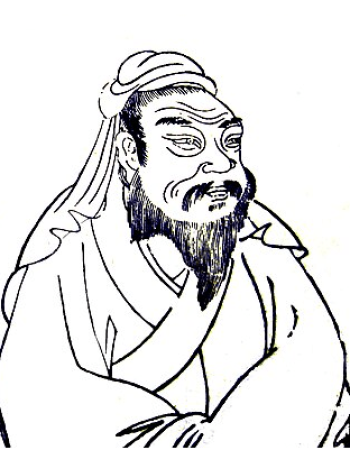
During this time, several western tribes, including the Huaiyi and Xurong, formed an alliance with Wu Geng to plot a rebellion. In response, the Duke of Zhou dedicated three years to quelling the uprising and ultimately executed Wu Geng.
Throughout this campaign, Zhou’s forces captured many Shang nobles who resisted the new regime. The Duke of Zhou labeled them “stubborn people” (wanmin) due to their defiance. Doubting their loyalty to their homeland and recognizing the challenges of governing the eastern territories from Hao Jing, the Zhou capital located far to the west, he decided to take action. He constructed a new eastern capital, Luo Yi, where he relocated the Shang nobles and stationed troops to keep a close watch on them.
Zhou Gong Dan committed his entire life to mentoring King Zhou Cheng until the king matured enough to govern the country. His most significant achievement is the system known as the Rites of Zhou, which he established to promote social order and ensure peace.
The Rites of Zhou: Foundations of Order and Legacy in Ancient China
The Rites of Zhou [周礼] consists of a comprehensive set of institutions and ceremonial codes that the Duke of Zhou implemented during the Western Zhou period. These rites reflected the political, economic, cultural, social, and legal structures of Zhou society and later became one of the foundational texts of Confucianism, profoundly influencing future generations.
Major Contributions and Significance of the Rites of Zhou
- Guiding Social Life
The Rites of Zhou covered nearly every aspect of life—politics, military affairs, economics, education, science, and culture. It not only described how the government should operate but also shaped how people behaved and interacted in society. Its influence extended well beyond its time, establishing vital social norms for centuries.
- Becoming a Confucian Classic
Together with The Book of Rites and The Etiquette and Ceremonial, the Rites of Zhou formed one of the “Three Rites” (San Li) upheld by Confucianism. These texts laid the theoretical and moral foundations of ritual culture in ancient China, deeply affecting the design of future political and moral systems.
- Lasting Impact on Later Generations
Successive dynasties used the Rites of Zhou as a model for developing their political and ceremonial systems. The values it promoted—such as honoring elders and rulers, and governing through ritual, music, and law—became core principles of traditional Chinese culture. The text played a crucial role in preserving order and continuity in Chinese society for centuries.
The Rites of Zhou- Its significance
In conclusion, the Rites of Zhou served as a blueprint for Western Zhou society and became a foundational text for Confucianism. It helped establish order, define governance, and shape Chinese civilization. Today, it remains an essential resource for understanding early Chinese institutions and philosophy, particularly the concept of Filial Piety, which we have discussed previously as a core value of this philosophy.
The Rise and Fall of the Western Zhou Feudal System
The Zhou Dynasty stands as the final feudal dynasty following the Xia and Shang, showcasing both the peak and eventual failure of feudalism.
In its early stages, the feudal system brought stability, facilitated the expansion of Zhou rule, and stimulated economic growth across the realm. However, over time, the very system that strengthened the dynasty began to undermine it, ultimately leading to its downfall.
How the Feudal System Strengthened the Zhou Dynasty
At first, the Zhou kings granted land to nobles—often members of the royal family or trusted allies—creating a network of feudal states loyal to the central court. These lords pledged their allegiance to the Zhou king, protected the royal family, and helped maintain order in distant regions.
By distributing power among these feudal lords, the Zhou dynasty extended its influence over a vast territory. This arrangement ensured stability, consolidated royal authority, and laid a robust foundation for further expansion. Simultaneously, the feudal states developed their lands. Local rulers organized agriculture, built infrastructure, and promoted trade.
As a result, regional economies flourished, bolstering the overall economic strength of the Zhou realm. This feudal structure also provided a political model that later dynasties would adapt, making it a lasting institutional legacy. More than a hundred feudal states emerged during the Western Zhou period, some large and others are as small as a town. This distribution of power helped the king maintain political stability and secure support.
How the Feudal System Led to Decline
As generations passed, the feudal lords began consolidating power within their territories. The system’s hereditary succession allowed them to pass rulership down through generations, making many feudal states increasingly independent. Some lords ignored their duties to the Zhou court, disregarded ancestral obligations, and started acting as independent rulers.
This weakening of loyalty toward the central authority eroded the ideological foundation of the feudal system. Without strong ancestral ties or a unifying belief in the Zhou king’s supremacy, the system started to fracture. The royal house gradually lost control, while powerful feudal states began competing for dominance.
By the late Western Zhou period, these tensions resulted in widespread conflict. The Zhou kings could no longer command obedience or coordinate regional powers. As rival states battled for territory and influence, the centralized feudal order collapsed. This disintegration set the stage for the chaotic Spring and Autumn and Warring States periods
Conclusion for the Zhou Feudal System
The Western Zhou feudal system originally served as a powerful tool for expansion, governance, and development. It protected the royal family, strengthened political authority, and fostered economic growth. Yet, over time, it also empowered local rulers to the point where they rivaled—and ultimately undermined—the central government. While the system achieved early success, its long-term instability directly contributed to the dynasty’s fall.
The Western Zhou experience illustrates how a political system, no matter how effective at first, must adapt over time—or risk becoming its own undoing.Bottom of Form
The End of Western Zhou Dynasty
The Western Zhou period officially ended in 771 BC. However, its legacy continued with another 514 years during the Eastern Zhou period, featuring approximately 25 more kings of Zhou. The authority and power of King Zhou fell short of commendation.
Instead of Eastern Zhou, historians often label the period as the “Spring and Autumn Period” and the “Warring States Period,” reflecting the diminishing dignity and influence of the Zhou royal family.
Next Dynasty : The Eastern Zhou