
Introduction : An Eastern Miracle of Human Civilization
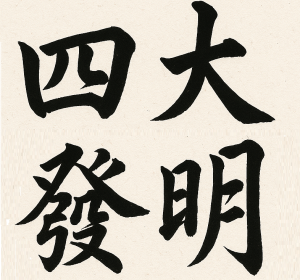
Throughout world history, China has stood out as a major birthplace of human civilization due to its long history, brilliant culture, and remarkable creativity. Ancient Chinese people achieved remarkable advances in agriculture, astronomy, medicine, metallurgy, architecture, and many other fields. Among these achievements, the Four Great Inventions of Ancient China—Papermaking, Printing, Gunpowder, and the Compass —stand out as the pride of the Chinese.
These four great inventions not only profoundly changed the course of Chinese history but also shaped the development of human civilization. They spread knowledge, fostered cultural exchange, advanced scientific progress, and transformed the global landscape. Without the Four Great Inventions, the course of human history would be completely different.
Besides the four great inventions mentioned above, the ancient Chinese created many other remarkable inventions worth mentioning. I especially appreciate the invention of Silk and the calculation tool, the Chinese Abacus. I will discuss these two inventions at the end of this article.
What Are the Four Great Inventions?
1. Papermaking: A Revolution in the Carrier of Knowledge
Before inventing paper, people recorded information on bulky and expensive materials. The Chinese used tortoise shells, animal bones, bronze, stone, bamboo slips, and silk in succession. During the Western Han Dynasty, Dongfang Shuo wrote a memorial to Emperor Wu of Han on 3,000 bamboo slips, which required two strong men to carry. Although silk was lightweight, it was expensive and difficult to popularize. This situation of “expensive silk and heavy bamboo slips” severely hampered the spread and development of culture.
From Prototype to Maturity: Cai Lun and “Cai Hou Paper”
Papermaking originated in the Western Han Dynasty. Early plant fiber papers, such as “Baqiao Paper,” were coarse and did not serve as ideal writing materials. The Eastern Han Dynasty saw the true breakthrough. Cai Lun, a court eunuch, built on his predecessors’ experience and introduced key technological innovations. In 105 AD, he presented his invention to the court and showed that he could use inexpensive and readily available materials like tree bark, hemp ends, rags, and old fishing nets to create high-quality, affordable paper. This invention became known as “Cai Hou Paper.”
Cai Lun systematized and standardized the papermaking process. He created a complete production process: separating and shredding raw materials, pulping, papermaking, and drying. This principle still forms the foundation of the modern papermaking industry. By using rags and fishing nets, he pioneered the earliest form of “waste recycling,” embodying the beginnings of a circular economy. By developing new raw materials such as tree bark, he ensured a steady supply of resources for papermaking.
Spread and Influence
Papermaking quickly spread throughout the Chinese Empire, replacing bamboo slips and silk, and laying the material foundation for cultural prosperity. It then moved along the Silk Road, reaching Korea and Japan around the 7th century AD and the Arab world via Central Asia in the 8th century. After the Battle of Talas (751 AD), Arabs in Samarkand learned the technique directly from captured Tang Dynasty craftsmen, turning Samarkand into the papermaking center of the Arab Empire. Papermaking then spread through Arabia to North Africa and Spain, and finally reached Europe in the 12th and 13th centuries.
Papermaking sparked intellectual liberation in Europe. Before this, Europeans relied on expensive parchment scrolls; copying a single Bible required over 300 sheets of parchment, and the church monopolized knowledge. China’s papermaking technology dramatically lowered the cost of books, paving the way for the Renaissance and the Reformation. Without cheap paper, Gutenberg’s printing press would have had far less impact. Papermaking revolutionized the medium of knowledge and allowed the light of thought to reach a much broader range of social classes.
A Symbol of Civilization
Paper not only crowns Chinese science and technology but also symbolizes its cultural spirit. It records words, carries ideas, and perpetuates civilization. As scholars have said, “Paper is an extension of human memory, a second life of civilization.”
Click below to learn more on the Chinese ancient paper making :
2. Printing - The Invention That Spread Knowledge
Embryo and Maturity
After inventing papermaking, the Chinese developed printing and ushered in the era of mass-produced written communication. As early as the Sui and Tang dynasties, Chinese artisans mastered woodblock printing. The Diamond Sutra, engraved in 868, stands as the world’s earliest extant printed book.
Bi Sheng took an even more revolutionary step in the history of printing during the Qingli period of the Northern Song Dynasty by inventing movable type. He replaced solid, carved woodblocks with movable clay type, making typesetting and printing more flexible and efficient.
Technology Spread and Global Impact
Printing spread to Korea and Japan via the Silk Road, and then to Europe through the Arab world. In the 15th century, Gutenberg in Germany improved printing by using metal movable type, sparking Europe’s “Printing Revolution.” Printing technology broke the constraints of copying speed and enabled the publication of vast numbers of books. This innovation popularized education fuelled religious reform and scientific enlightenment, and liberated thought. Printing technology stands as one of the key forces driving the rise of modern civilization
From Woodblock Printing to Digital Printing
Ancient Chinese printing was not merely a technology; it also reflected a vibrant cultural spirit. It democratized knowledge and enabled ideas to circulate widely. Today, this spirit persists from movable type to electronic publishing, and from woodblock printing to digital printing.
Click below to learn more on the ancient Chinese woodblock printing :
3. Gunpowder—From Alchemy to the Revolution of War
An Accidental Discovery
Ancient Chinese Taoists gave rise to gunpowder through their alchemical experiments. While pursuing immortality, they discovered that mixing saltpeter, sulfur, and charcoal created an explosive reaction. The Tang Dynasty text, “The Secret of the Golden Elixir of the Supreme Saint Ancestor,” records a recipe for gunpowder and marks humanity’s first documented encounter with chemical explosives.
The Chinese first used gunpowder in fireworks and salutes to symbolize auspiciousness and celebration; however, they soon applied it to military uses. By the Tang and Song dynasties, the Chinese had already developed gunpowder weapons such as rockets, muskets, and thunder bombs. During the Yuan and Ming dynasties, firearms manufacturing advanced to a more sophisticated level and became a decisive force in warfare.
Arabs introduced gunpowder to Europe and triggered the Western Military Revolution. Artillery brought down the castle system, led to the decline of chivalry, and broke down the feudal structure, ushering in a new era in European history.
The Cultural Symbolism of Gunpowder
Gunpowder not only transformed warfare but also symbolized humanity’s courage and wisdom in harnessing nature’s power. Its peaceful uses—such as fireworks and mining—embodied the Chinese creative spirit of “valuing harmony.”
Click here to learn more on the invention of Gunpowder:
4. The Compass - Opening the Way to the Great Geographical Discoveries
The Secret of the Magnet
Early Chinese observers of nature discovered magnetism and invented the compass. As early as the Warring States period, they created the Sinan compass, a direction-finding instrument made from natural magnets. During the Eastern Han Dynasty, scholars first clearly recorded the phenomenon of magnetism pointing south in Lun Heng.
By the Song Dynasty (960-1279 AD), navigators widely used the compass. During the Northern Song Dynasty (960-1127 AD), Shen Kuo documented the “magnetic needle pointing south” in Mengxi Bitan. During the Southern Song Dynasty (1127-1279 AD), Zheng He used the compass to sail across the Indian Ocean and opened a new era of maritime exchange between China and foreign countries.
The compass transformed world navigation. European navigators such as Columbus, Da Gama, and Magellan used it to achieve the Great Geographical Discovery and ushered in the era of human globalization.
The Fusion of Science and Philosophy
The compass is more than a navigational tool; it also represents the ancient Chinese philosophy of “harmony between man and nature”—the idea of navigating the world by observing and understanding nature’s laws. This spirit of balancing science and philosophy embodies the wisdom of Chinese civilization
Ushering in the Age of Discovery
Arabs introduced the compass to Europe around the late 12th and early 13th centuries. For European navigators, this technology became a lifesaver. In the murky and foggy North Atlantic, celestial navigation often failed, so navigators relied on the compass as their only “eye.” Prince Henry of Portugal used it to explore the West African coast; Vasco da Gama discovered a new route to India; Columbus “discovered” the New World; and Magellan’s fleet completed the first circumnavigation of the globe.
These discoveries radically altered European worldviews, proved the theory of a spherical Earth, and connected previously isolated continents into a single entity. They sparked the global exchange of species, restructured trade networks, established colonial systems, and created the first world market. The compass, this small needle, pointed the way to a new, globalized era in human history.
Click below to learn more on the Origin of the Compass:
Common Characteristics and Significance of the Four Great Inventions
- Rooted in Life, Serving Humanity
The Four Great Inventions did not arise from fantasy; instead, they grew out of everyday needs: people needed paper for writing, printing for communication, guides for exploration, and gunpowder for defense. These inventions embody the ancient Chinese spirit of practicality.
- They Promoted Global Civilization
People spread these four technologies across the world via the Silk Road, building a bridge for the exchange of Chinese and Western civilizations. For this reason, the British scholar Francis Bacon once declared, “These inventions changed the face of the world.
- The Integration of Science and Humanities
The Four Great Inventions represent more than scientific achievements; they also embody the humanistic spirit. Ancient Chinese scientists grounded their work in ethics and philosophy, emphasizing the harmonious unity of man and nature.
Other Great Inventions of the Ancient China- Silk and Abacus
Historians generally recognize the Four Great Inventions of Ancient China. However, I believe Silk and Abacus, are equally great invention that worth mentioning.
Silk connected China with the world even earlier and wove global history with its flexible thread, deserves this honour. Whereby the Abacus, has contributed massively to trade and commerce, as well as to the construction algebra.
A. The Invention of Silk
The invention of Silk uniquely crystallizes the wisdom of the Chinese nation. The ancient Chinese profoundly understood and ingeniously domesticated natural species as early as the Yangshao culture (some 5000 years ago). Starting from a silkworm egg, they carefully nurtured spinning silkworms and transformed them into strands of silk through dozens of delicate processes, such as cocoon selection, cocoon boiling, reeling, and weaving.
The Chinese dynasties established official workshops to protect this technology. The complex technical system and exquisite craftsmanship remained China’s closely guarded core secret for another 3000 years before the Korean and Japan learned it at 3 A.D .
Click below to learn more on the Chinese ancient Silk making:
B. The Invention of Abacus
The ancient Chinese abacus, known as the “suanpan”, stands as one of China’s remarkable inventions in mathematics and commerce. Artisans developed it during the Han Dynasty and perfected it by the Ming Dynasty, constructing a wooden frame with rods and beads to represent units, tens, hundreds, and more.
Merchants, scholars, and officials rapidly performed addition, subtraction, multiplication, and division with the abacus long before modern calculators existed. Its design demonstrates mathematical precision and efficiency, enabling users to complete complex operations with simple finger movements.
The abacus not only showcases China’s ingenuity in numerical computation but also influenced other cultures across Asia, such as Japan and Korea, establishing a foundation for early computing and inspiring modern digital calculation methods.
When I was in primary school, I learned the basic logic of the abacus but did not practice the calculations. What about you—do you know how it works?
Click below to learn more about the Chinese abacus. You will need to watch more videos to learn the practice calculation.
Conclusion: China’s Enduring Spirit of Innovation
Reflecting on the epic story of the Four Great Inventions, we cannot help but ponder: Why did they originate in ancient China?
Strong national organization (such as officials leading research like Cai Lun), a prosperous agricultural economy that supported a vast handicraft industry, a relatively open environment for cultural exchange (such as the Silk Road), and the practical experience ancient artisans accumulated all contributed to these inventions.
However, history holds an irony: although these four great inventions aimed to improve lives, preserve civilization, and encourage exploration, different civilizations produced vastly different outcomes. In Europe, people integrated these inventions with local social structures, commercial spirit, and a thirst for knowledge, ultimately dismantling feudal strongholds and ushering in the modern world.
In contrast, in China—where these technologies originated—an increasingly conservative feudal system, a policy of emphasizing agriculture over commerce, and the ideology of “valuing morality over tools” prevented these inventions from sparking deeper scientific revolutions and social change after the Ming and Qing dynasties. Ultimately, the Chinese fell behind in the modern clash with Western civilization.
Thus, the story of the Four Great Inventions not only celebrates ancient Chinese wisdom and creativity but also offers a profound historical lesson. This story shows that technological advancement does not guarantee lasting advantage. For a civilization to remain vibrant, people must invent and create, and also cultivate the soil and mechanisms that help inventions grow, evolve, and trigger social change.
The Four Great Inventions stand as the Chinese nation’s enduring contributions to humanity. They transformed the world and left endless reflections for future generations.