
How Did the Three Kingdoms of China Period Begin?
Since childhood, we have learned about the Three Kingdoms of China (220-280 AD). Today, we delve into the legends of Kingdom Wei, Shu, and Wu. The era that produced countless heroic and tragic tales.
The story begins at the end of the Eastern Han Dynasty, the chaotic Yellow Turban Rebellion shook the dynasty’s very foundations. Cao Cao “held the emperor hostage to command the princes” and unified the north after the Battle of Guandu. Sun Quan inherited his family legacy and established his rule in Jiangdong. Liu Bei, after many twists and turns, secured a foothold in Jingzhou and eventually conquered Yizhou.
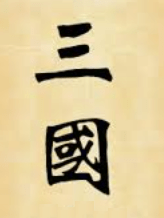
Together, Cao Cao’s Wei Kingdom, Sun Quan’s Wu Kingdom, and Liu Bei’s Su Han Kingdom unveil a romantic legend that has been passed down for millennials.
The Three Kingdoms of China Period Summary: The Story of Wei, Shu & Wu
The Three Kingdoms period (220-280 AD) marked a pivotal era in Chinese history. For sixty turbulent years, leader’s maneuverer politically, waged military battles, and fostered cultural integration.
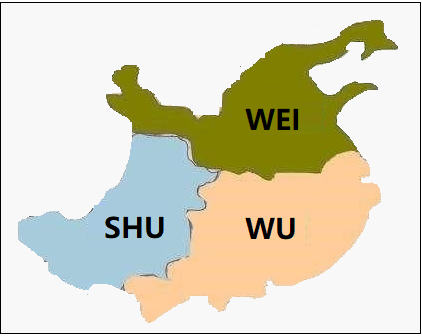
I. The Formation of the Tripartite Balance of Power
The era began as warlords clashed at the end of the Eastern Han Dynasty. Cao Cao leveraged his political position—”holding the emperor hostage to command the princes”. He defeated Yuan Shao at the Battle of Guandu, unifying northern China. However, in 208 AD, Sun Quan and Liu Bei’s allied forces, outnumbered but determined, stopped Cao Cao’s southward advance at the Battle of Red Cliffs. This sets the stage for the empire’s tripartite division.
In 220 AD, Cao Pi forced Emperor Xian of Han to abdicate and established the Wei Kingdom. In 221 AD, Liu Bei declared himself emperor in Chengdu, continuing the Han dynasty as Shu Han. And in 229 AD, Sun Quan formally declared himself emperor and established the Wu Kingdom. These events ushered Chinese history into the era of tripartite balance between Wei, Shu, and Wu.
II. Capable Ministers in Times of Peace and Heroes in Times of Turmoil
This era produced brilliant minds. Statesmen like Cao Cao, Cao Pi, and Sima Yi strengthened the Wei Kingdom. They boasted vast territory and a large population, by implementing the military-agricultural colony system that revitalized the northern economy.
In Shu Han, Zhuge Liang’s dedicated leadership ensured strict laws, pacified the southern regions. He launched repeated northern expeditions, turning offense into defense and setting a standard of loyalty and wisdom for later generations.
In Wu, Sun Quan led efforts to use the Yangtze River as a natural barrier, vigorously develop shipbuilding and overseas trade. He pacify the Yue tribes, and consolidate control over Jiangdong.
III. The Historical Trend of Unity After Divide
As a generation of heroes passed, internal conflicts emerged within the Three Kingdoms. Shu Han lost talented leaders in its later years and fell when the powerful Wei minister Sima Zhao conquered it. The Wei court endured a bitter power struggle between the Cao and Sima families, with the Sima family ultimately seizing control.
In 266, Sima Yan usurped the Wei throne and established the Jin Dynasty. In 279, the Jin army launched a six-pronged attack on Wu and swept through the land. The next year, Sun Hao of Wu surrendered, reuniting the empire.
The Records of the Three Kingdoms and the Romance of the Three Kingdoms
Like many others, I first learned about the history of the Three Kingdoms period from the “Romance of the Three Kingdoms.” Later, I discovered it was a novel.
The Records of the Three Kingdoms (三国志) and the Romance of the Three Kingdoms (三国演义). One a historical record, the other a literary work. Jointly its shape the magnificent memory of the Three Kingdoms period in the hearts of the Chinese people.
Chen Shou (233-297 AD), a historian of the Western Jin Dynasty, wrote The Records of the Three Kingdoms. He presented a straightforward and concise account, recognized Cao Wei as the legitimate dynasty, and faithfully traced the rise and fall of the Three Kingdoms. His work provides the fundamental historical foundation for later generations studying this period.
By contrast, Luo Guanzhong wrote The Romance of the Three Kingdoms as a chapter-style novel in the late Yuan and early Ming Dynasties. Readers praise it as “seven parts fact, three parts fiction.” Luo Guanzhong infused the historical framework with artistic elements, vividly portraying the heroic figures. He created characters and stories deeply embedded in Chinese culture.
In short, The Records of the Three Kingdoms stands as a rigorous historical archive, while The Romance of the Three Kingdoms emerges as a vivid literary epic. The former provides the historical framework, and the latter breathes soul and life into the era. Together, these works complement each other, enabling the story of Three Kingdoms of China to transcend dynastic changes and become a treasured part of Chinese cultural heritage.
The Great Powers of the Three Kingdoms of China: A Clash of Ambition
The Kingdom of Wei
The Kingdom of Wei (220-266 AD), name after its location at the Wei Commandery territory, stood as the most powerful and largest of the Three Kingdoms. Cao Cao unified northern China at the Battle of Guandu, established the Tuntian system (military agricultural colonies) to restore production, and promoted meritocracy, which attracted many talented individuals and laid Wei’s foundation.
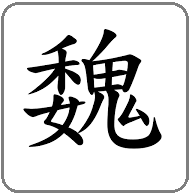
In 220 AD, Cao Pi forced Emperor Xian of Han to abdicate and formally established the State of Wei with its capital at Luoyang. Wei’s leaders inherited the Han system and created the far-reaching Nine-Rank System to select officials. Military commanders consistently kept strategic pressure on Shu Han and Eastern Wu.
However, powerful ministerial families continually challenged Wei’s imperial authority. After Cao Pi and Cao Rui, a young emperor took the throne, and the Sima family gradually seized control of the court. Through internal struggles, including the Incident at Gaoping Tombs, the Sima family wrested power from the Cao family. Ultimately, Sima Yan usurped the throne in 266 AD and founded the Jin Dynasty.
Although the Wei Kingdom lasted only 46 years, its rulers effectively governed the core region of the Central Plains, carried forward the political legacy of the Han Dynasty, and laid a solid foundation for unification under the Western Jin Dynasty. Wei served as the legitimate successor and formed the main axis of history during the Three Kingdoms of China period.
The Kingdom of Shu Han
Liu Bei founded the Kingdom Shu (221-263), name after its location at the Ba-Shu (todays Sichuan), one of the Three Kingdoms that claimed kinship with the Han imperial family. He established the capital in Chengdu and set out to continue the Han dynasty‘s legacy. Liu Bei traced his lineage to Liu Sheng of the Han royal family, so he named his kingdom Han.
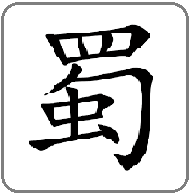
Shu Han faced the most arduous path to nationhood. Liu Bei spent half his life in turmoil before he finally secured Zhuge Liang’s assistance. Following the Longzhong strategy, Liu Bei allied with Sun Quan against Cao Cao, and after the Battle of Red Cliffs, seized Jingzhou. He then conquered Yizhou and Hanzhong, ultimately forging a tripartite balance of power. In 221, Liu Bei declared himself emperor and established the state of “Han,” later known as Shu Han.
Shu Han remained the weakest state in terms of national strength and population. However, Zhuge Liang ruled with strict laws, strengthened the economy, and pacified the southern regions, enabling Shu Han to maintain stability. Zhuge Liang and his successor Jiang Wei repeatedly launched northern expeditions against Cao Wei, striving to restore the Han dynasty. Although most of these campaigns failed, striving to restore the Han dynasty. Although most of these campaigns failed, their spirit became a timeless model.
In its later years, eunuchs seized power and accelerated the state’s decline. In 263, Wei general Deng Ai secretly crossed Yinping and marched on Chengdu. Liu Shan, the last emperor of Shu Han, surrendered, and the dynasty fell. Although Shu Han lasted only forty-two years in a remote region, its idealism and tragic nature left a legendary and poignant mark on history
The Kingdom of Wu
The Kingdom of Wu (229-280 AD) name after its location at the ancient state of Wu, lasted the longest among the Three Kingdoms regimes and established its base in Jiangdong. Sun Ce laid the foundation, and Sun Quan consolidated and developed the state. In 229 AD, Sun Quan formally declared himself emperor and established his capital at Jianye (present-day Nanjing).
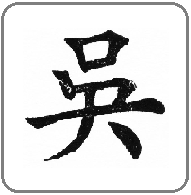
Wu anchored its rule in the natural barrier of the Yangtze River and the strength of its powerful navy. To ensure survival, its leaders flexibly shifted diplomatic alliances—sometimes siding with Liu Bei against Cao Cao, other times with Cao Cao to contain Liu Bei. Commanders like Zhou Yu and Lu Xun led Wu to decisive victories at the Battles of Red Cliffs and Yiling, which solidified the tripartite balance of power.
Domestically, Sun Quan actively promoted the “military agricultural colony system” and vigorously developed shipbuilding and overseas trade, even dispatching fleets to Yizhou (present-day Taiwan). He resolved the issue of the Yue tribes within Wu’s territory through both appeasement and conquest, promoting the initial development of Jiangnan.
However, Wu’s later years saw brutal struggles for the throne, such as the “Second Palace Struggle,” and internal strife among aristocratic families severely weakened the state. Sun Hao, the last emperor, ruled with tyranny and cruelty. He ultimately surrendered in 280 AD, when the Western Jin Dynasty launched a six-pronged attack, ending the Wu Kingdom. Wu’s development of Jiangnan laid a crucial foundation for the later southward shift of China’s economic centre.
The Fall of the Three Kingdoms of China
The Jin Dynasty ended the Three Kingdoms of China period. Sima Zhao made his ambitions clear. His son, Sima Yan, took the Wei throne and founded Jin. In 263, Shu Han surrendered. In 280, Sun Hao, ruler of Wu, gave up. Wu’s fall unified the empire. This victory ended ninety years of war. The Sima family gained power.
The next chapter in history belongs to the Jin Dynasty.
The Masterminds and Warriors Who Defined the Three Kingdoms of China
The vivid character portrayals in “Romance of the Three Kingdoms” give each figure a distinct and memorable personality. Each captivates readers and stands strong on their own. I will highlight three of my favourite main characters here.
Cao Cao – the Formidable Lord
Cao Cao (155-220), courtesy name Mengde, emerged as an outstanding statesman, military strategist, and writer of the Three Kingdoms period. He founded the Cao Wei regime.
Although born into a family of eunuchs, Cao Cao rose to prominence amidst the chaos of the late Eastern Han Dynasty. He strengthened his power by incorporating the Yellow Turban rebels of Qingzhou and employed the political strategy of “holding the emperor hostage to command the princes.” By bringing Emperor Xian of Han to Xuchang, he gained absolute political dominance. On the battlefield, he eliminated powerful separatist forces such as Lü Bu, Yuan Shu, and Yuan Shao, unifying northern China and laying a solid foundation for the Wei state.
Cao Cao ruled with a strong hand, appointing officials based solely on merit and vigorously promoting the military-agricultural colony system, which restored socio-economic development in the north. Though he often acted with suspicion and enforced the law strictly, he also achieved exceptional literary success.
Historians have long debated Cao Cao’s legacy. He stood out as both a brilliant, ambitious warlord during a chaotic era and a powerful but treacherous minister of the Han Dynasty.
Zhuge Liang – the Divine Strategist
Zhuge Liang (181-234), courtesy name KongMing, was the Chancellor of Shu Han during the Three Kingdoms period. He was an outstanding statesman, military strategist, and thinker in Chinese history, hailed as a model of “a wise prime minister for all ages.”
Originally living in seclusion in Longzhong, he emerged from seclusion after Liu Bei’s three visits to his thatched cottage. He presented the strategic blueprint of the “Longzhong Strategy,” assisting Liu Bei in allying with Sun Quan against Cao Cao, successively acquiring Jingzhou and Yizhou, and ultimately establishing the Shu Han regime. After Liu Bei’s death, he was entrusted with the responsibility of assisting the young emperor Liu Shan, loyally managing the government.
Domestically, he was known for his strict rule of law, economic development, and pacification of the southern regions, bringing great prosperity to Shu. Externally, his military talent is evident in his rigorous military discipline, the development of the Eight Trigrams Formation, and inventions such as the wooden ox and flowing horse. His loyalty and wisdom have become a symbol of national spirit. Zhuge Liang, with his personal aspect of “dying before achieving his mission,” (鞠躬尽瘁,死而后已), transcends history itself and becomes the ultimate embodiment of loyalty and wisdom in Chinese culture.
KongMing flying lantern
Do you remember the flying lanterns we discussed in the previous article on the “Mid Autumn Festival”?
According to legend, Zhuge Liang invented flying lanterns while Sima Yi besieged him, using them to send messages for help. We call its Kong Ming lanterns after his courtesy name.

Guan Yu – the Righteousness General
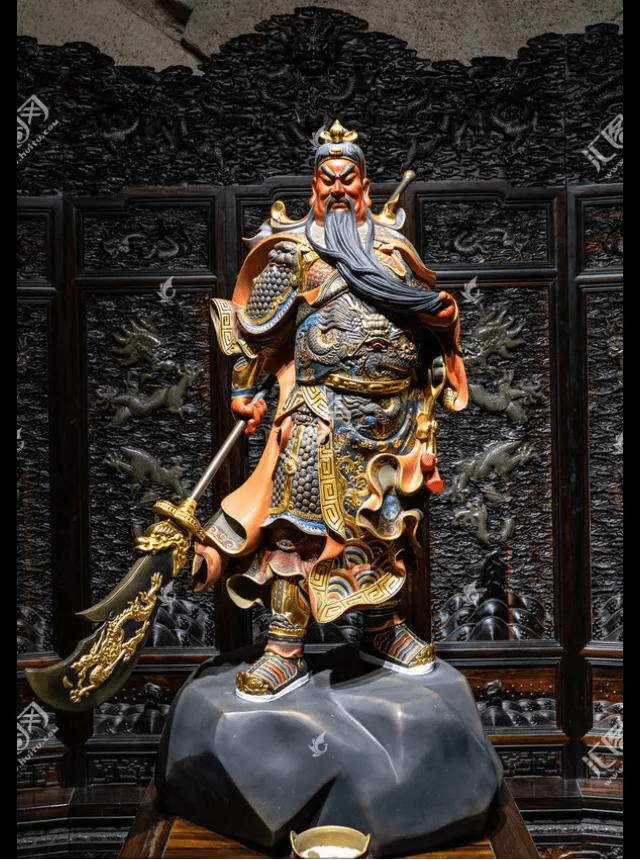
Guan Yu (160-220), courtesy name Yunchang, gained fame as a general of Shu Han during the Three Kingdoms period. Generations revered him as the “Martial Saint” for his loyalty, righteousness, courage, and bravery.
In his early years, Guan Yu swore brotherhood with Liu Bei and Zhang Fei, vowing to live and die together. He remained loyal to Liu Bei, enduring countless hardships. Guan Yu demonstrated exceptional bravery, while guarding Jingzhou, he famously “flooded the seven armies,” captured Yu Jin alive, and killed Pang De, shaking the Central Plains and reaching the pinnacle of his military career.
However, Guan Yu’s arrogance and pride allowed Lü Meng of Eastern Wu to launch the surprise attack known as “Crossing the Yangtze River in White Robes.” This manoeuvre resulted in Guan Yu’s defeat at Maicheng, his capture, and execution.
Guan Yu, also known as Guan Gong or Guan Di, earned fame for his loyalty and righteousness. Today, many in the Chinese community worship Guan Gong. Have you ever seen his statue?
Strategic Masterpieces: The Military Genius of Three Kingdoms Battles
The three kingdoms frequently battle—sometimes one-on-one, sometimes through alliances, and often in chaotic multi-front fights. These battles captivate and excite audiences. In this piece, I will discuss what I consider the two most important battles.
1. The Battle of Guandu: Cao Cao's Rise to Power
The Battle of Guandu (200 AD) decisively shaped the struggle for hegemony in northern China during the late Eastern Han Dynasty. Cao Cao and Yuan Shao faced off in this pivotal conflict.
At the time, Yuan Shao commanded over 100,000 troops, controlled vast territory and ample supplies, and far outmatched Cao Cao. In the early stages of the war, Yuan Shao advanced toward Guandu and forced a stalemate. Despite having fewer troops and supplies, Cao Cao employed flexible tactics and readily adopted his strategists’ advice. The turning point came when Cao Cao accepted Xu You’s plan and personally led 5,000 elite infantry and cavalry on a night raid at Wuchao, burning all of Yuan Shao’s supplies.
Yuan Shao’s army collapsed in morale, and his general Zhang He defected. Cao Cao seized the opportunity to launch a full-scale counterattack and decisively defeated Yuan Shao’s forces. Yuan Shao fled back to Hebei with only 800 cavalry and never recovered.
The is another classic example of a smaller force defeating a larger one. This victory laid the foundation for Cao Cao’s unification of northern China, established him as the era’s most powerful warlord, and removed the major obstacle to the later creation of the Cao Wei state.
2. The Battle of Red Cliffs: Cao Wei's Naval Catastrophe
The Battle of Red Cliffs (208 AD) decisively shaped the late Eastern Han Dynasty. The allied forces of Sun Quan and Liu Bei fought against Cao Cao’s southward invasion and laid the foundation for the Three Kingdoms period.
At that time, Cao Cao had largely unified the north and led over 200,000 troops south, determined to conquer Jiangdong in one swift campaign. Guided by Lu Su, Zhuge Liang, and others, Liu Bei and Sun Quan forged an alliance. Sun Quan appointed Zhou Yu as commander-in-chief, who led approximately 50,000 allied troops to resist the powerful enemy.
The two armies faced off at Red Cliffs. Huang Gai, one of Zhou Yu’s generals, exploited the Cao army’s unfamiliarity with naval warfare and the prevalence of disease by proposing a fire attack. Pretending to surrender and seizing the opportunity of a southeast wind, the allies launched fire ships that stormed Cao Cao’s naval camp and extended the attack to the shore. The flames devastated Cao Cao’s forces, inflicting heavy casualties and forcing Cao Cao to retreat north.
This battle stands as a famous example in Chinese history of a smaller force defeating a larger one. The allied victory thwarted Cao Cao’s momentum to unify the country, consolidated Sun Quan’s Jiangdong base, and gave Liu Bei the chance to seize Jingzhou and advance into Yizhou. The battle formally established the tripartite division of China into Wei, Shu, and Wu.
From Ancient China to Today: The Modern Influence of the Three Kingdoms
Although the Three Kingdoms period has ended, its profound political and military wisdom and vivid characters continue to shape modern Chinese and East Asian society.
In the cultural sphere, the Three Kingdoms inspires endless creativity. Stories from the Romance of the Three Kingdoms, dramas, storytelling, films, and video games (such as Dynasty Warriors and the Romance of the Three Kingdoms series) have firmly embedded its characters and anecdotes in people’s minds. The wisdom of Zhuge Liang, the loyalty of Guan Yu, and the ambition of Cao Cao transcend history, serving as universal moral symbols and cultural touchstones that influence business strategies, team management, and interpersonal relationships.
On a spiritual level, the Three Kingdoms inspires a sense of responsibility—”Everyone is responsible for the rise and fall of the nation”—as well as the professional ethic of “dedicating oneself to the cause until death” and an indomitable will to fight in adversity. These ideals continue to motivate modern people. Its grand narrative and complex portrayals of human nature also enrich the public’s aesthetic experience.
Furthermore, strategists still study Three Kingdoms military tactics—like borrowing strength at the Battle of Red Cliffs or the psychological ploy of the Empty City Stratagem—as classic cases in business warfare and competitive strategy. The Three Kingdoms period has evolved from a historical era into a unique cultural phenomenon that transcends time and continues to resonate.
Walking in the Footsteps of Legends: the Ancient Sites of the Three Kingdoms
Although the Three Kingdoms period ended nearly two thousand years ago, its historical traces still mark the land of China and provide tangible evidence for people to recall that turbulent era.
Hubei and the Sichuan-Chongqing region hold the highest concentration of Three Kingdoms relics. In Hubei, the cliff carvings and river at the ancient battlefield of Chibi evoke the heroic defeat of Cao Cao by fire.
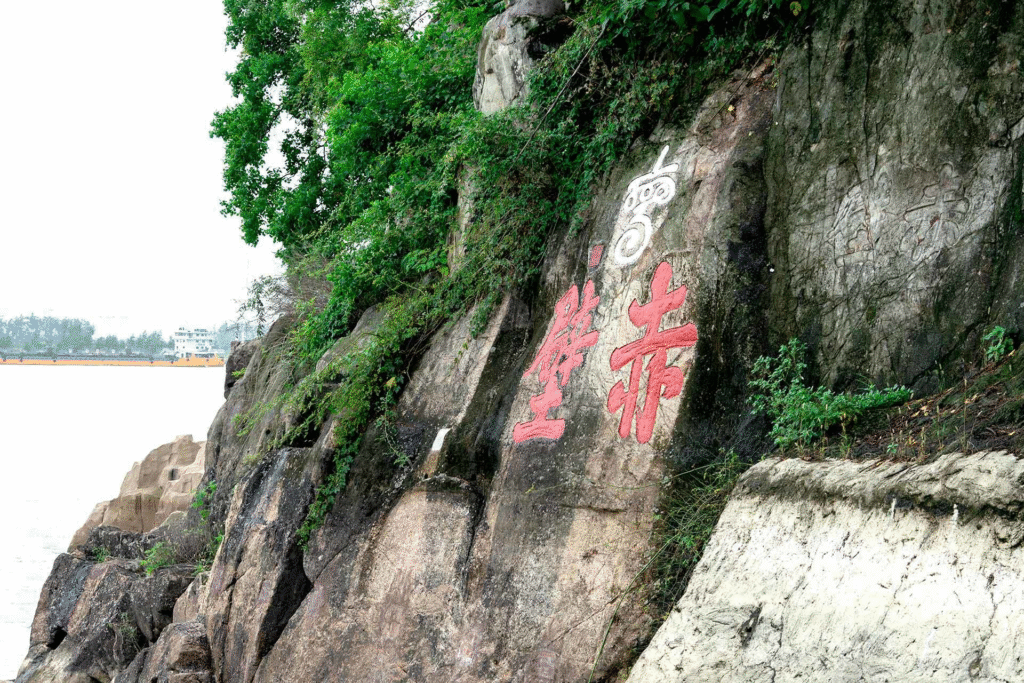
The ancient Longzhong in Xiangyang, where Zhuge Liang lived before emerging from seclusion, offers a serene and rustic setting. The ancient city wall of Jingzhou bears witness to Guan Yu’s tragic loss of Jingzhou.
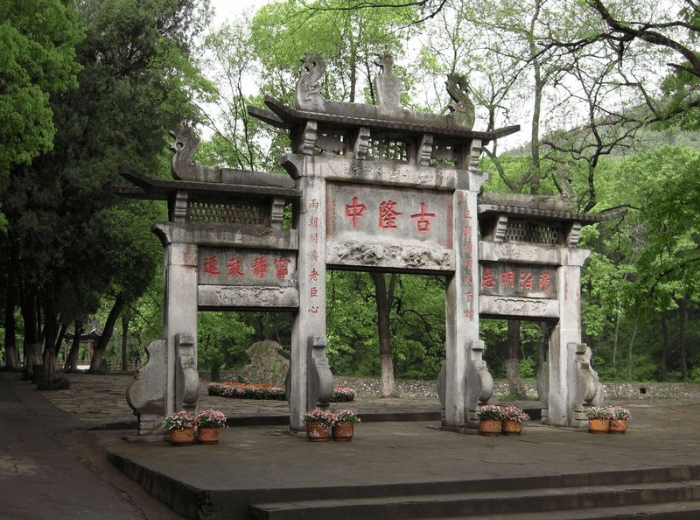
The Central Plains region also preserves the grandeur of the Wei Kingdom. Xuchang in Henan once served as the capital of the Cao Wei dynasty and still preserves relics such as the “Spring and Autumn Pavilion.” The ancient battlefield of Guandu silently recalls the classic clash where a smaller force defeated a larger one.
These historical sites, whether rebuilt by later generations or surviving as ruins, embody the weight of history. They make the stories in books tangible and continually draw people to visit and trace the origins of the Three Kingdoms.
If you are keen to walk in the footsteps of ancient heroes, pay visit to a historical relic in Hubei, China. The site, Chibi Ancient Battlefield of the Three Kingdoms (chibiguzhanchang.com), is dedicated to the themes of the Three Kingdoms of China period.
The Three Kingdoms Wisdom that shapes my personal business
Do you remember the Longzhong Strategy that Zhuge Liang presented to Liu Bei? It holds a significant personal meaning for me.
“First take Jingzhou, then Yizhou, establishing a three-way power balance, then plan to conquer the Central Plains”
When I started my small business about 15 years ago, I had no overall strategic plan and operated with a trial-and-error, do-or-die mentality. About 10 years ago, I developed a comprehensive strategic plan for my business, adopting the Longzhong Strategy to guide us forward.
We follow a master plan as our roadmap. With limited resources, we start by focusing only on business segments within our reach and in small territories that offer the greatest rewards on our inputs. We expand once we achieve results, growing segment by segment, until the market becomes a competition among three major players.
Not too long ago, only two major players remain, and we are one of them.
Song That Tells the Epic: The Soundtrack of the Three Kingdoms of China Era
I selected a song about the Three Kingdoms for you. The song, “Cao Cao” is performed by Singaporean singer J.J. Lim. This YouTube version features English lyrics and will help you better appreciate the era of heroic spirit. Enjoy !